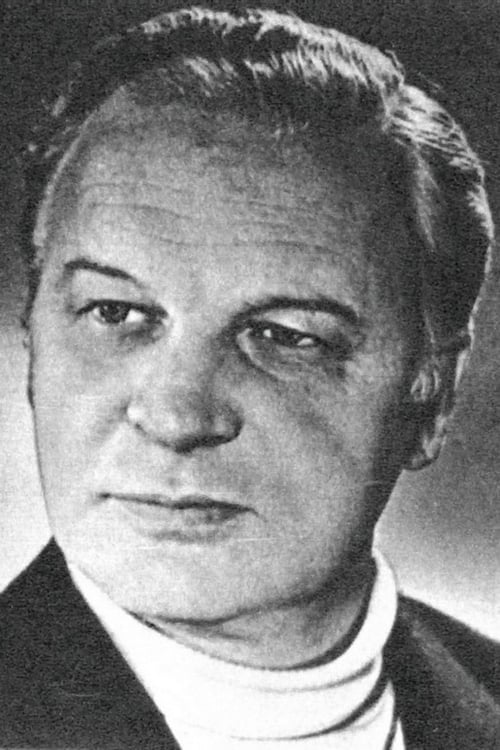
Stanislav Rostotsky
Biography
Stanislav Iosifovich Rostotsky (Russian: Станисла́в Ио́сифович Росто́цкий; 21 April 1922, in Rybinsk – 10 August 2001, in Vyborg) was a Soviet film director and screenwriter, the recipient of the two USSR State Prizes and a Lenin Prize. He was named People's Artist of the USSR in 1974.
Known For & Full Filmography4 Titles

Drama Series - 1993, 16 episodes • as Narrator
An outstanding performance featuring brilliant storytelling, high stakes drama, and unforgettable character arcs.

Drama Series - 2016, 16 episodes • as Self (archive footage)
An outstanding performance featuring brilliant storytelling, high stakes drama, and unforgettable character arcs.

Drama Series - 1998, 16 episodes • Main Cast Role
The quiet life of the county town ended with the arrival of two young people from the capital, and what followed will remain in the memory of local residents for a long time. Intrigues and passions, meanness and nobility, love and death are closely intertwined in the life of an outwardly decent society.The outstanding Russian writer brought to the pages of his novel a number of famous and vivid characters who prepared the tragic events that happened in Russia in the 20th century through their activities.

Movie - 1968, 2h 15m • as Boy
Bezhin Lug (Bezhin Meadow) was to be a Soviet film about a young farm boy whose father attempts to betray the government for political reasons by sabotaging the year's harvest, and the son's efforts to stop his own father to protect the Soviet state, culminating in the boy's murder and a social uprising. Assigned to Soviet film-maker Sergei Eisenstein, the filming followed the same path as with his previous effort, "Que Viva Mexico", into cost overrun and over-shooting of footage. Furthermore, Eisenstein's usage of forbidden experimental film techniques outraged his government superiors, who ordered the film destroyed before it was even completed. All that survives are the first and last frames of each shot, preserved by Sergei Eisenstein’s wife, Pera Atasheva. The 1967 reconstruction, by Naum Kleiman of the Eisenstein Museum and Sergei Yutkevich of Gosfilmofond, places these frames in order, approximating the original film.