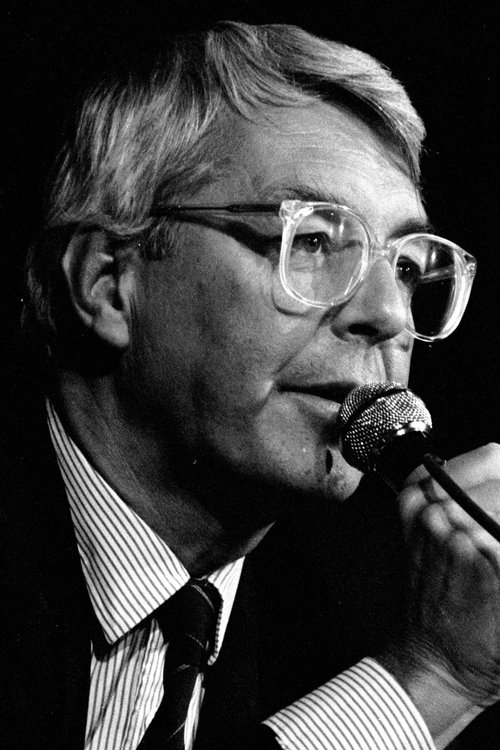
Francois-Henri de Virieu
Biography
François-Henri de Virieu, marquis de Virieu (18 December 1931 – 27 October 1997) was a French journalist and television presenter. François-Henri de Virieu was born in Paris, son of the marquis Xavier de Virieu (1898–1953), colonel who was known for his acts of resistance during the Maquis du Vercors, and of Marie-Françoise de Brugière de Barante (1906–2004). He graduated with a degree of agricultural engineering at the École supérieure d'agricultures d'Angers. Five centuries before, Jean de Fay, seigneur de Virieu, one of his ancestors, was already interested in agriculture and accepted to convert to Roman Catholicism to protect the Italian immigrant Pierre Benay who imported from Bologne silk mills for the weavers of Lyon. François-Henri de Virieu comes from a very ancient family of the French nobility. His is also the direct descendant of François Henri, comte de Virieu (1754–1793). François-Henri de Virieu began as an advisor for agricultural cooperatives. He became in 1956 an editor-in-chief for publications of the Centre d'Études des Techniques Agricoles. He was attached at the Institut d'Organisation Scientifique du Travail Agricole as an agricultural advisor. As a great-grandson of one of the founders Le Pèlerin, he presents himself at La Croix, but despite the great welcome of Jean Gélamur, he prefers to attempt his chance at Le Monde where the contact with Hubert Beuve-Méry is promoted due to the same belonging of this one at the same resistance field of the one that belonged his father. François-Henri de Virieu did not wait less than six months to publish his first article. He officially joined the newspaper in July 1958 with an internship in agricultural affairs, during a productive period of agricultural manifestations, with negotiations of the Single market and reforms from the ministry of Edgard Pisani. He later published his first book La Fin d'une agriculture (1967) and also collaborates at the same time at different regional publications. In 1968, he was named chief of the department for social affairs in the economic service. In November 1969, becoming the same time a member of the French Democratic Confederation of Labour, he joined the OFRT as the chief of the political, economic and social service of Information Première. Assisted by young collaborators like Guy Claisse, Hervé Chabalier and Bernard Langlois, he became the editor-in-chief of the daily news in 1970. But the acknowledgement of Pierre Desgraupes in July 1972 forces him to leave the television field and become the director of the news service at Informations, the weekly news program in which he became one of the columnists since 1969. He then became unemployed in 1973 after its failure and published the same year Lip : 100 000 montres sans patron. ... Source: Article "François-Henri de Virieu" from Wikipedia in English, licensed under CC-BY-SA 3.0.
Known For & Full Filmography5 Titles
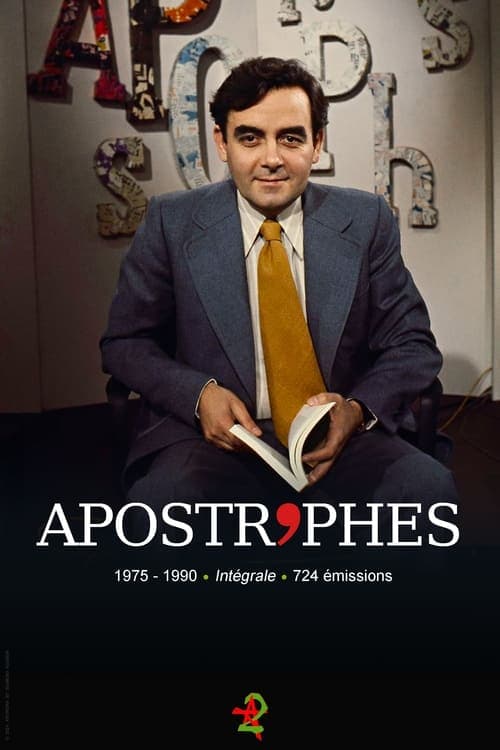
Drama Series - 1975, 16 episodes • as Self
Apostrophes was a live, weekly, literary, prime-time, talk show on French television created and hosted by Bernard Pivot. It ran for fifteen years (724 episodes) from January 10, 1975, to June 22, 1990, and was one of the most watched shows on French television (around 6 million regular viewers). It was broadcast on Friday nights on the channel France 2 (which was called "Antenne 2" from 1975 to 1992). The hourlong show was devoted to books, authors and literature. The format varied between one-on-one interviews with a single author and open discussions between four or five authors.

Drama Series - 1982, 16 episodes • as Self
An outstanding performance featuring brilliant storytelling, high stakes drama, and unforgettable character arcs.

Movie - 1981, 2h 15m • as Self
On the eve of the publication of the zero issue of the daily newspaper "Le Matin de Paris", we dive into the heart of an editorial staff directed by Claude Perdriel in turmoil.

Movie - 1998, 2h 15m • as Self
On April 2, 1995, the television channel Canal+ censored the documentary "Pas vu à la télé" (Not Seen on TV), directed by Pierre Carles, which had been commissioned a few weeks earlier by the program director, Alain de Greef. "Pas vu à la télé" was slated to be featured in Canal+'s "TV Day" segment, under the heading "Television, Power, Morality." Carles recounted this censorship in the feature film "Pas vu pas pris" (Not Seen, Not Caught), released in theaters on November 18, 1998. It drew over 160,000 viewers. Eighteen years later, "Pas vu à la télé" remains unaired on French television. As for "Pas vu, pas pris," it has still not been broadcast on French television. However, it has been shown on television in Belgium, Quebec, and Switzerland. Since then, nine billionaires now control more than 80% of the media in France, while eleven of them account for 57% of the television audience.
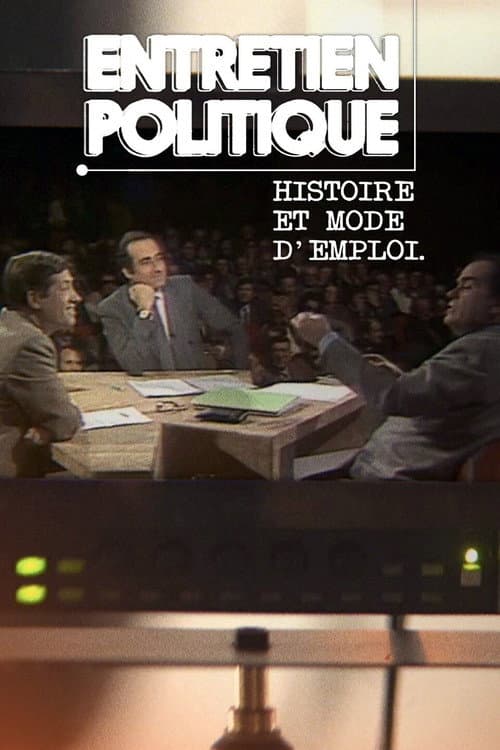
Movie - 2020, 2h 15m • as Self (archive footage)
An outstanding performance featuring brilliant storytelling, high stakes drama, and unforgettable character arcs.