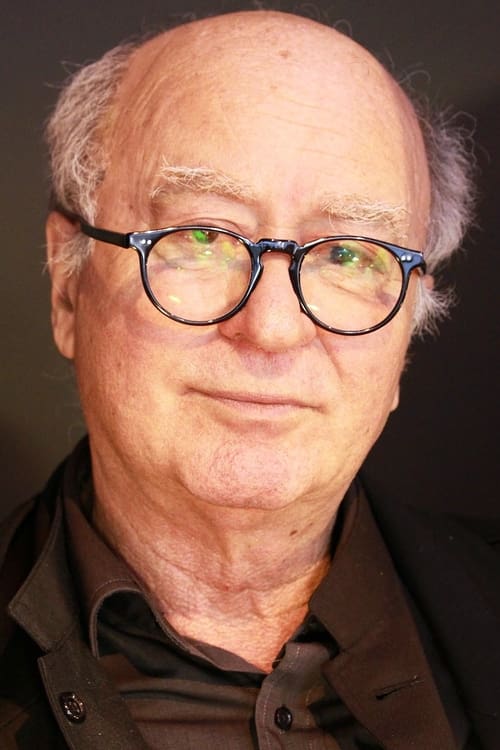
Georges Wolinski
Biography
Georges David Wolinski (28 June 1934 – 7 January 2015) was a French cartoonist and comics writer. He was killed on 7 January 2015 in a terrorist attack on Charlie Hebdo along with other staff. Georges David Wolinski was born on 28 June 1934 in Tunis, French Tunisia to Jewish parents, Lola Bembaron and Siegfried Wolinski. His father, who was from Poland, was murdered in 1936 when Wolinski was two years old. His mother was a Tunisian of Italian Jewish descent. He moved to metropolitan France in 1945 shortly after World War II. He started studying architecture in Paris and following his graduation he began cartooning. Wolinski began cartooning for Rustica in 1958, and started drawing political cartoons in 1960. Three years later, in 1961, he started contributing political and erotic cartoons and comic strips to the satirical monthly Hara-Kiri. During the student revolts of May 1968, Wolinski co-founded the satirical magazine L'Enragé with Jean-Jacques Pauvert and Siné. He served as the editor-in-chief of Hara-Kiri from 1961 to 1970. In the early 1970s, Wolinski collaborated with the comics artist Georges Pichard to create Paulette which appeared in Charlie Mensuel and provoked reactions in France during its publication. Wolinski's work appeared in the daily newspaper Libération, the weekly Paris-Match, L'Écho des savanes and Charlie Hebdo. In 2005, he was the recipient of the Grand Prix de la ville d'Angoulême at the Angoulême Festival. The same year he was also awarded the Legion of Honour. Wolinski was responsible for the design of the livery of several art cars that raced in various sportscar championships and in the Le Mans 24 Hours. After the loss of his first wife, Jacqueline Saba, in 1966, in a car accident, he married, in 1972, Maryse Wolinski. Along with seven of his colleagues, two police officers, and two other people, Wolinski was killed on 7 January 2015 in the Charlie Hebdo shooting when armed terrorists stormed the Charlie Hebdo newspaper offices in Paris. The asteroid 293499 Wolinski was named in his memory on 22 February 2016 by its discoverer Jean-Claude Merlin. Source: Article "Georges Wolinski" from Wikipedia in English, licensed under CC-BY-SA 3.0.
Known For & Full Filmography13 Titles

Drama Series - 1987, 16 episodes • as Self
An outstanding performance featuring brilliant storytelling, high stakes drama, and unforgettable character arcs.
Drama Series - 1998, 16 episodes • as Self
An outstanding performance featuring brilliant storytelling, high stakes drama, and unforgettable character arcs.
Drama Series - 1975, 16 episodes • as Self
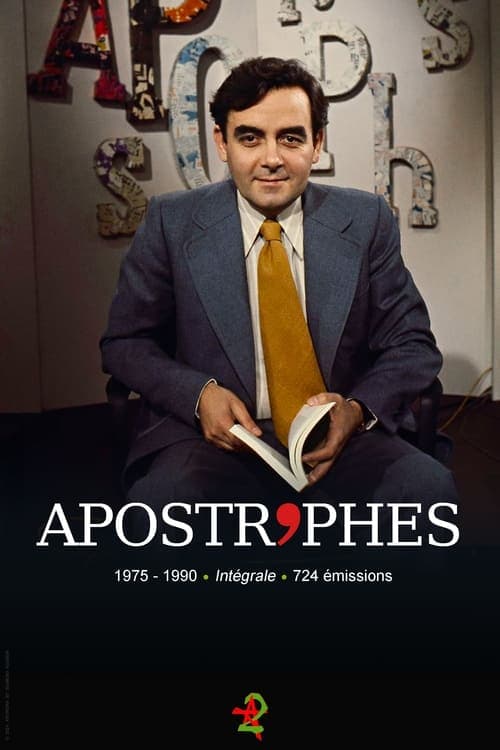
Apostrophes was a live, weekly, literary, prime-time, talk show on French television created and hosted by Bernard Pivot. It ran for fifteen years (724 episodes) from January 10, 1975, to June 22, 1990, and was one of the most watched shows on French television (around 6 million regular viewers). It was broadcast on Friday nights on the channel France 2 (which was called "Antenne 2" from 1975 to 1992). The hourlong show was devoted to books, authors and literature. The format varied between one-on-one interviews with a single author and open discussions between four or five authors.
Drama Series - 1972, 16 episodes • as Self
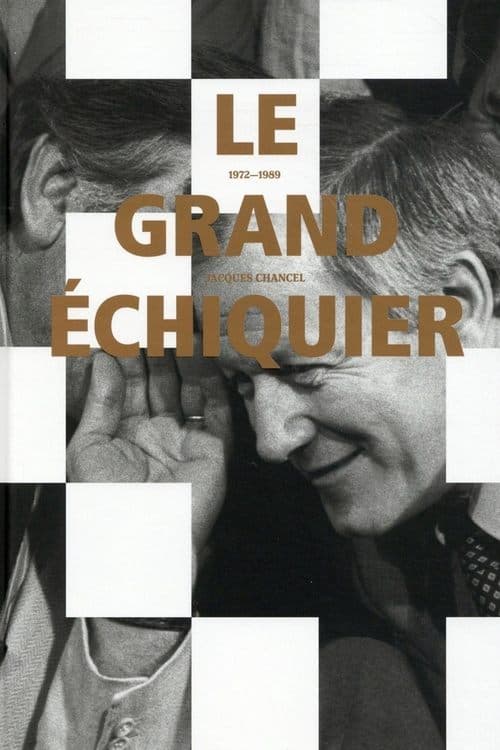
Le Grand Échiquier is a French variety television program created and presented by Jacques Chancel. It aired at 8:30 pm on the first channel of the ORTF from January 12, 1972 to July 12, 1972, then on the second color channel of the ORTF from September 1972 to December 1974, and finally on Antenne 2 from January 1975 to December 21, 1989. The program returned to France 2 on December 20, 2018 and is hosted by Anne-Sophie Lapix.
Drama Series - 1987, 16 episodes • as Self
An outstanding performance featuring brilliant storytelling, high stakes drama, and unforgettable character arcs.

Movie - 2009, 2h 15m • as Self
Georges Bernier, alias Professor Choron, died January 10, 2005. He was 75 years old. The few death notices that appeared in the French press mainly focused on the scatological nature of his humor, or on the good man's provocative side. No one recalled the essential, which was that with his passing not only had one of the great proprietors of the French press disappeared, but he'd taken with him an artist in his own right, quite unique in his own way : Professor Choron.
Drama Series - 1964, 16 episodes • as Self
An outstanding performance featuring brilliant storytelling, high stakes drama, and unforgettable character arcs.

Movie - 1972, 2h 15m • as Self
Feature film.

Movie - 1981, 2h 15m • as Self
"Droit de Réponse" (Right of Reply) is a French debate program broadcast between December 12, 1981 and September 19, 1987 on the TF1 channel, presented by Michel Polac and produced by Maurice Dugowson. Broadcast live on a weekly basis, on Saturdays from 8.30 p.m., the right of reply has been the source of many controversies, due to the various speakers who have come to present their point of view on the show (which leads to famous scandals , remained in the memory of viewers), but also for the variety and relevance of the topics covered, which ensured the success of the program on the air for several years. On French television, this program is considered by some observers as a “pioneer program in terms of controversy-show or clash, in modern language”.

Movie - 1984, 2h 15m • as Peasant with the hat
The love affairs of Bob, a womanizer and seducer and Mammouth, the unhappy loner.

Movie - 1981, 2h 15m • as Le chauffeur de taxi (uncredited)
Georges Le Roi lives odd jobs and shares his life between two girlfriends. One day, he falls in love with Sophie and records a message of love. The tape is mistakenly broadcast in the company. In the face of success, Sophie founded the company Tell me about love and spread the messages of Georges, who soon became a sex symbol.

Movie - 2012, 2h 15m • as Self
An outstanding performance featuring brilliant storytelling, high stakes drama, and unforgettable character arcs.

Movie - 2024, 2h 15m • as Self (archive footage)
After the Charlie Hebdo shooting events by the hand of jihadist terrorists David wants to bring on stage a play based on the late satyrical cartoonist George Wolinski's comicbook strips, but he struggles to finds cohoperation from institutional figures. He then agrees to direct in a small provincial town a stage play about an apulian folk dance, the Pizzica. Masterminding to disguise the original planned one, with its sexually explicit nature, into the accorded one he will gain the complicity of the curious cast hired on the spot. The start of the rehearsals will arouse excited consensus either censure which will lead to a growing boycott of the staging.