Peter Handke
Biography
Peter Handke (born 6 December 1942, in Griffen, Austria) is an avant-garde Austrian novelist, playwright and screenwriter. In 2019, Handke was awarded the Nobel Prize in Literature "for an influential work that with linguistic ingenuity has explored the periphery and the specificity of human experience."
Known For & Full Filmography13 Titles
Drama Series - 1948, 16 episodes • as Self
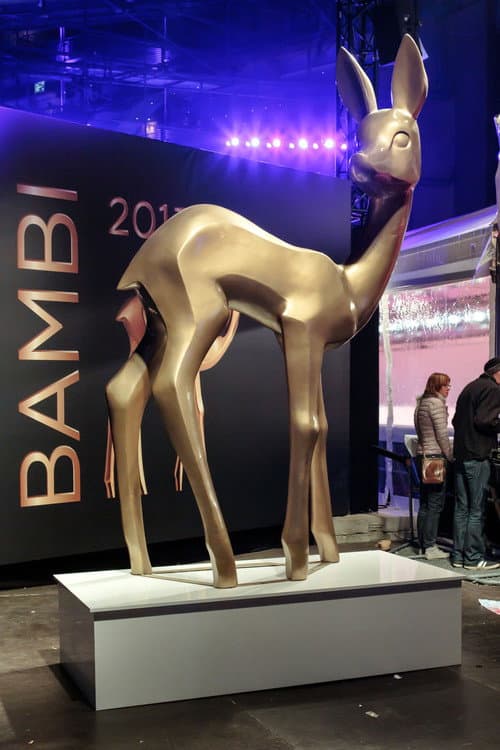
The Bambi, often called the Bambi Award and stylised as BAMBI, is a German award presented annually by Hubert Burda Media to recognize excellence in international media and television to personalities in the media, arts, culture, sports, and other fields "with vision and creativity who affected and inspired the German public that year", both domestic and foreign. First held in 1948, it is the oldest media award in Germany. The trophy is named after Felix Salten's book Bambi, A Life in the Woods and its statuettes are in the shape of the novel's titular fawn character. They were originally made of porcelain until 1958, when the organizers switched to using gold, with the casting done by the art casting workshop of Ernst Strassacker in Süßen.

Movie - 1974, 2h 15m • as Man at Chuck Berry Concert (uncredited)
German journalist Philip Winter has a case of writer’s block when trying to write an article about the United States. He decides to return to Germany, and while trying to book a flight, encounters a German woman and her nine year old daughter Alice doing the same. The three become friends (almost out of necessity) and while the mother asks Winter to mind Alice temporarily, it quickly becomes apparent that Alice will be his responsibility for longer than he expected.

Movie - 2016, 2h 15m • as Himself
In the sixties, Peter Handke was one of the first to show how the business works: the writer as angry young man and pop star of the literary scene. As soon as he was on the bestseller lists, he turned his back on the hype. For many years, he has lived and worked in his house in a Parisian suburb, more quietly and more hospitably. Peter Handke's precise, free gaze becomes perceptible in his texts, his conversations, the cosmos of his notebooks.

Movie - 2016, 2h 15m • as Gardener
A man and a woman share their musings on love and freedom one summer night. The couple’s conversation meanders through memories, unspoken desires and passion through poetic dialogue.

Movie - 2008, 2h 15m • as Self
The early films of Wim Wenders are now regarded as landmarks of European film. Alice in the Cities, Wrong Move and Kings of the Road became foundations of the German New Wave and cemented the reputation of their director. In One Who Set Forth: Wim Wenders' Early Years Marcel Wehn explores the background to these films. Through personal recollection and rare home movie footage, it documents the director's early life, from experiments with his first camera, via his deviation from a career in medicine in favour of art and film, through to international recognition for the Road Trilogy. Central to these were themes that became cornerstones of all his work: national identity, the importance of personal relationships and the allure of the road. With contributions from the director and the many collaborators who helped define his vision, One Who Set Forth is a compelling account of Wim Wenders' life and work.

Movie - 2003, 2h 15m • as Self
This is a documentary about the making of "Wings of Desire" (1987). The director, writer, actors, composer and other contributors speak at length and in detail about how the award-winning film was devised, cast, filmed, scored and edited.

Movie - 1967, 2h 15m • Main Cast Role
Five young writers from the 'Forum Stadtpark' in Graz who were little-known back then play bizarre characters from their manuscripts, which often appeared in book form much later.
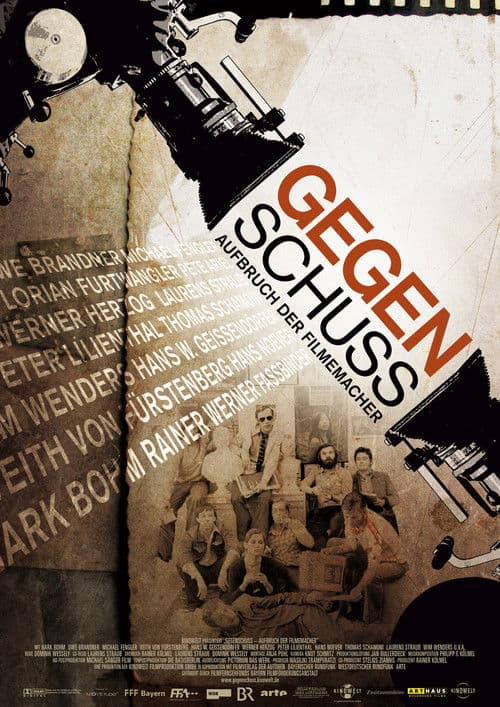
Movie - 2008, 2h 15m • as Self (uncredited)
Documentary about filmmakers of the New German Cinema who were members of the legendary Filmverlag für Autoren (Film Publishing House for Authors). Among them are Werner Herzog, Rainer Werner Fassbinder, and Wim Wenders.

Movie - 2004, 2h 15m • as Self
Reencounter with a myth. 40 years since Georg Stefan Troller reported from his adopted home in "Pariser Journal," he returns to his old haunts. A journey through time in a city of contradictions that is always reinventing itself.

Movie - 2017, 2h 15m • Main Cast Role
Based on Handke's 1986 poem "Canto alla Durata". The film explores the concept of duration through the Austrian writer's life and work, featuring actor Bruno Ganz reading poems written by Handke.

Movie - 1969, 2h 15m • Main Cast Role
Another short was 3 American LPs, which was the first film I did with Peter Handke. It was a film about American music, about three pieces of three LPs. There was a song by Van Morrison, another by Harvey Mandel, and one of Credence Clearwater Revival. It was mainly the music and some shots out of a car, landscapes out of the car window. And it had a little bit of commentary – dialogue between Peter and me about American music and about how American rock music was about emotion and images instead of sounds. That is to say, about a kind of phenomenon, that it was in a way a kind of film music, but without a moving picture. It was a 12-minute film and it was never shown. – Wim Wenders

Movie - 1985, 2h 15m • as The Narrator (voice)
In the space of a short 65 minutes, a woman enters the luxury apartment of a wealthy man with an eccentric fascination for the female form and is paid both for her sexual favors and for lying there naked and letting him examine the aesthetics of her body. For most of the hour, as the concise narration of Marguerite Duras' novel on eroticism and aesthetics fills the aural gaps, actress Marie Colbin's form fills the visual gaps. But unless viewers consider the feminine eyeball or microscopic views of skin exotic and worth lingering over, the eroticism lies more in the imagination than on the screen. In fact, the female body lying on the bed, taken away from the spirit that animates it, is really just a corpse -- raising the question, exactly what is the "malady of death?"

Movie - 2012, 2h 15m • as Self
Bernd Liepold-Mosser returns home to a place bordering the bilingual region of Lower Carinthia to talk to the people there about their “great son” Peter Handke. His search unearths the many unresolved contradictions and ambivalences of a small place where there is repression of the Slovenian-speaking past.