Chris Brasher
Biography
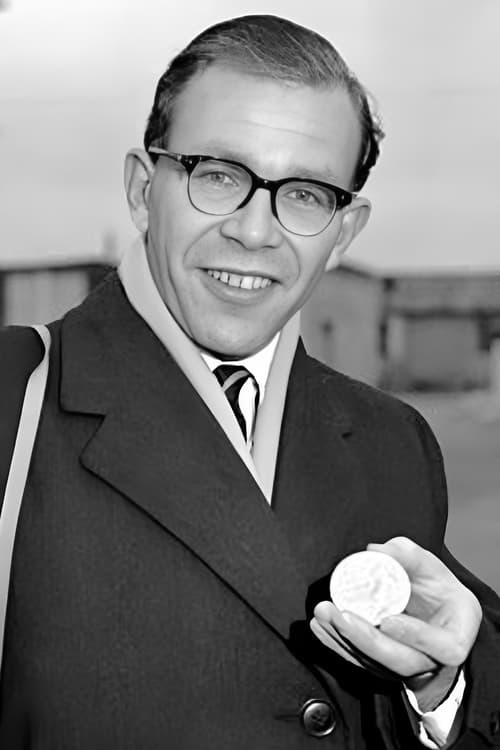
Christopher William Brasher CBE (21 August 1928 – 28 February 2003) was a British track and field athlete, sports journalist and co-founder of the London Marathon. Brasher married English tennis champion Shirley Bloomer in 1959 Born in Georgetown, British Guiana, "Chris" Brasher went to Rugby School and then to St John's College, Cambridge, where he studied geology. He was an avid mountaineer and as a student was president of the Cambridge University Mountaineering Club and in 1948 led an expedition to Baffin Island with W A Deer. At the 1956 Summer Olympics in Melbourne, Brasher finished first in the 3000 meter steeplechase with a time of 8 minutes 41.2 seconds, but was disqualified for allegedly interfering with another runner, Ernst Larsen of Norway. The following day, after an investigation, he was reinstated as a gold medalist. Brasher had celebrated for several hours before the delayed medal ceremony, and later claimed to have been "the only Olympic champion to be totally and absolutely dejected when he received a medal". He was one of the pioneers of orienteering in Britain and can claim the sport's first public mention in an article in The Observer in 1957: "I have just taken part, for the first time, in the one of the best sports in the world. Hard to know what to call it. Norwegians call it 'orientation'..." He has had distinguished careers in print, as a sports editor for The Observer newspaper, and in broadcasting, as a reporter for Tonight. He founded Chris Brasher's Sporting Emporium in 1971; this later became Sweatshop. In 1978 he designed the innovative Brasher Boot - a walking shoe with the comfort of a running shoe. In their time, these were some of the best products, but their quality declined, were merged into Berghaus under Pentland ownership in 2014, and were finally discontinued before 2017. In 1981, John Disley and Brasher founded the London Marathon. In 1983, he became the second president of the International Marathon and Distance Racing Association, a position he held until 1987. Also in 1983, Brasher teamed up with longtime friend John Disley to found Fleetfoot Limited in Lancaster, England. Fleetfoot distributed The Brasher Boot and other sporting goods to retailers. Fleetfoot acquired the rights to be Reebok's UK distributor and subsequently marketed as Reebok UK before becoming a subsidiary of the Pentland Group in 1988. After the acquisition by Pentland, Brasher remained active in the company as chairman of the board. Reebok UK was sold to Reebok International in 1990 when Pentland Group sold its 55% stake in Reebok United States and Reebok International. He was awarded the CBE in 1996. He was awarded the Livingstone Medal by the Royal Scottish Geographical Society in 2002. In 2003 he died at his home in Chaddleworth, Berkshire, after battling pancreatic cancer for several months.
Known For & Full Filmography9 Titles

Movie - 1967, 2h 15m • as Self
In July of 1967, 15 million people watched one of the most audacious BBC outside broadcasts ever undertaken - the climbing of the Old Man of Hoy. Chris Bonnington and Tom Patey, took the East Face; Joe Brown and Ian McNaught-Davis, the South Face; Peter Crew and Douglas Haston took the South-East Arête. A further crew of four climbers- Hamish MacInnes, John Cleare, Rusty Baillie and Ian Clough carried cameras and transmitters. The live broadcast consisted of 6 connections between 7th and 9th of july whose titles were: The Old Man and The Climbers, Six Men, The Bivouac, Six Men-One Challenge, The first man to the summit, The Challenge and the Conquest. One week later BBC broadcasted a 30-minute program with the highlights of the live coverage.

Movie - 1992, 2h 15m • as Self
Commemorative program for the 25th anniversary of the live broadcast of the ascent of the Old Man of Hoy. In July of 1967, 15 million people watched one of the most audacious BBC outside broadcasts ever undertaken - the climbing of the 'Old Man of Hoy'. Chris Bonnington and Tom Patey, took the East Face; Joe Brown and Ian McNaught-Davis, the South Face; Peter Crew and Douglas Haston took the South-East Arête. A further crew of four climbers- Hamish MacInnes, John Cleare, Rusty Baillie and Ian Clough carried cameras and transmitters. 25 years later, BBC gathers the protagonists to recover the footage and to look back on the achievement.

Movie - 1967, 2h 15m • as Self
A making of the live broadcast of the ascent of the Old Man of Hoy. In July of 1967, 15 million people watched one of the most audacious BBC outside broadcasts ever undertaken - the climbing of the 'Old Man of Hoy'. This is an account of how the BBC-1 television programme was organised, together with recordings made during the broadcast, and interviews with those who helped to make it possible as well as those who did the actual climb.

Movie - 1965, 2h 15m • as Self
A climb to mark the 100th anniversary of the first ascent of the Matterhorn, live on TV. The programme, a coproduction of the Swiss, French, Italian and British televisions, was shown throughout Europe, in the United States and in Japan in a series of 5 broadcasts between 8 and 16h. This film, by the Swiss television, is a summary of the live broadcasts in a in a single program. Ian McNaught-Davis roped with the guide Heinrich Taugwalder and Jean Juge with Robert Bichler narrating the ascent while they climb by the original Whymper route. They follow the progression of Michel Darbellay and Hilti von Allmen who climb the north face by the Schmidt route. The program ends when all the teams meet at the summit.

Movie - 2024, 2h 15m • as Self
A climb to mark the 100th anniversary of the first ascent of the Matterhorn, live on TV. The programme, a coproduction of the Swiss, French, Italian and British televisions, was shown throughout Europe, in the United States and in Japan in a series of 5 broadcasts between 8 and 16h. This film is the reedited version by the french televison of all the broadcasts in a single program. Ian McNaught-Davis roped with the guide Heinrich Taugwalder and Jean Juge with Robert Bichler narrate the ascent while they climb by the original Whymper route. They follow the progression of Michel Darbellay and Hilti von Allmen who climb the north face by the Schmidt route. All them meet at the summit. Michel Vaucher, Yvette Vaucher and Othmar Kronig who were also ascending the north face are interviewed, and the program ends with the television teams descending the mountain. Ettore Bich and Paul Etter ascended by the Italian side.

Movie - 1970, 2h 15m • as Self
In August 1970 a spectacular rock climb was televised live on BBC in color. Seven climbers attempted three different routes on the cliffs of Anglesey. The event, presented by Christopher Brasher was transmitted live through 4 connections over the course of 31st of august. The routes climbed were: Spider's Web, by Joe Brown and Ian McNaught-Davis; Wen Slab, by Peter Crew and Don Whillans; and Tyrannosaurus Rex, by Laurie and Les Holliwell, and Janet Rogers. This was the first color live climbing program on BBC, following on from the success of earlier programs such as the ascent of the Old Man of Hoy in 1967.

Drama Series - 1958, 16 episodes • as Self (Host)
Grandstand was a British television sport programme. Broadcast between 1958 and 2007, it was one of the BBC's longest running sports shows, alongside BBC Sports Personality of the Year. Its first presenter was Peter Dimmock. There were only four main presenters of the programme during its long history: David Coleman, Frank Bough, Des Lynam, and Steve Rider. Changes in the structure of the programme during its last few years, however, meant it did not have a regular main presenter during this time. Among the more occasional hosts were Alan Weeks, David Icke, Clare Balding, Hazel Irvine, Bob Wilson, David Vine, Barry Davies, Dougie Donnelly, Harry Carpenter, Harry Gration, John Inverdale, Tony Gubba, Helen Rollason, Ray Stubbs and Sue Barker. The last editions of Grandstand were broadcast over the weekend of 27–28 January 2007.

Movie - 1965, 2h 15m • as Self
A climb to mark the 100th anniversary of the first ascent of the Matterhorn, live on TV. The program, a co-production of the Swiss, French, Italian and British televisions, was shown throughout Europe, in the United States and in Japan in a series of 5 broadcasts between 8 and 16h. This film is the re-edited version by the BBC of all the broadcasts in a single program. Ian McNaught-Davis roped with the guide Heinrich Taugwalder and Jean Juge with Robert Bichler narrate the ascent while they climb by the original Whymper route. They follow the progression of Michel Darbellay and Hilti von Allmen who climb the north face by the Schmidt route. All them meet at the summit.

Movie - 2008, 2h 15m • as Himself
In the war-zones of Liberia and Congo, four volunteers with Doctors Without Borders struggle to provide emergency medical care under extreme conditions. With different levels of experience, each volunteer must find their own way to face the challenges, the tough choices, and the limits of their idealism. "Living in Emergency" is a window into the seldom portrayed and less-than glamorous side of humanitarian aid work. It explores a world that is challenging, complex, and fraught with dilemmas - the struggles, both internal and external, that aid workers face when working in war zones and other difficult contexts.