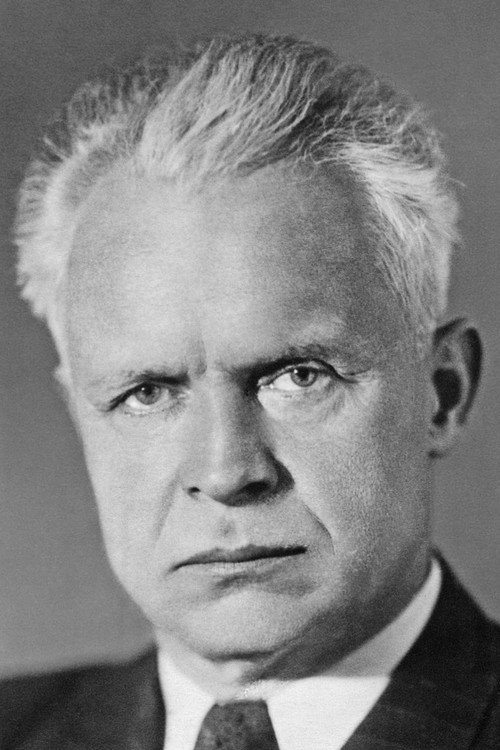
Alexander Dovzhenko
Biography
Alexander Petrovich Dovzhenko, also Oleksandr Petrovych Dovzhenko (Russian: Александр Петрович Довженко, Ukrainian: Олександр Петрович Довженко; September 10 [O.S. August 29] 1894 – November 25, 1956), was a Soviet film director and screenwriter of Ukrainian origin. He is often cited as one of the most important early Soviet filmmakers, alongside Sergei Eisenstein, Dziga Vertov, and Vsevolod Pudovkin, as well as being a pioneer of Soviet montage theory. Although Alexander Dovzhenko's parents were uneducated, his semi-literate grandfather encouraged him to study, leading him to become a teacher at the age of 19. Dovzhenko turned to film in 1926 when he landed in Odesa. His ambitious drive led to the production of his second-ever screenplay, Vasya the Reformer (which he also co-directed). He gained greater success with Zvenyhora in 1928 which established him as a major filmmaker of his era. His following "Ukraine Trilogy" (Zvenyhora, Arsenal, and Earth), although underappreciated by some contemporary Soviet critics (who found some of its realism counter-revolutionary), is his most well-known work in the West. For his film Shchors, Dovzhenko was awarded the Stalin Prize (1941); eight years later, in 1949, he was awarded another Stalin Prize for his film Michurin. After spending several years writing, co-writing and producing films at Mosfilm Studios in Moscow, he turned to writing novels. Over a 20-year career, Dovzhenko personally directed only 7 films. He was a mentor to the young Ukrainian Soviet filmmakers Larysa Shepitko and Sergei Parajanov. Dovzhenko died of a heart attack on November 25, 1956 in his dacha in Peredelkino. His wife, Yulia Solntseva, continued his legacy by producing films of her own and completing projects Dovzhenko was not able to create. The Dovzhenko Film Studios in Kyiv were named after him in his honour following his death.
Known For & Full Filmography11 Titles
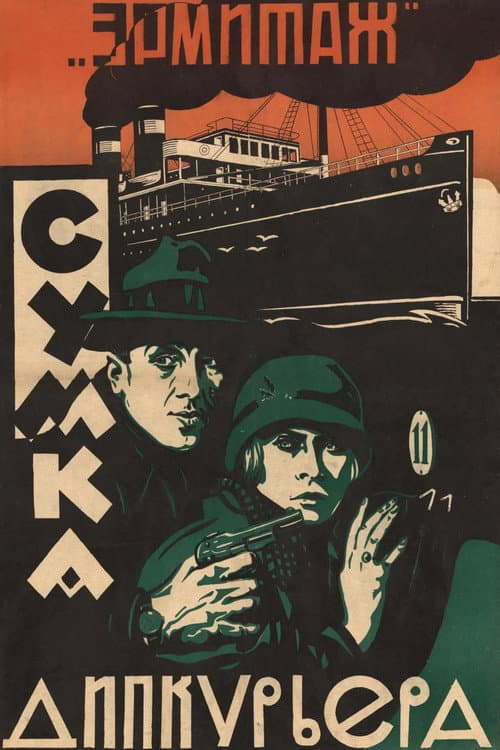
Movie - 1927, 2h 15m • as stoker
The Soviet embassy in England sends two couriers with diplomatic mail to Leningrad. The inspector of security police, White, and a group of policemen attack the Soviet diplomatic couriers at night. The documents get to an English trackman, who gives them to his son, a sailor in Portsmouth.
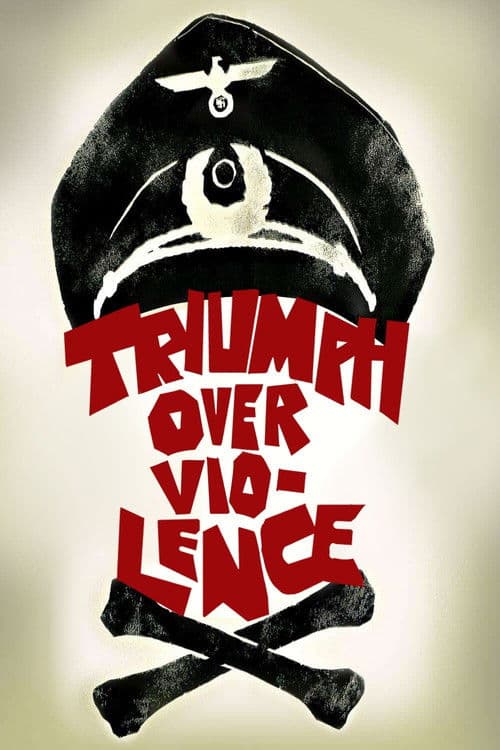
Movie - 1965, 2h 15m • as Self (archive footage)
Romm pulls out all the stops in its selection of documentary material to draw the viewer not only into absolute horror about fascism and nazism in the 1920s–1940s Europe, but also to a firm conviction that nothing of the sort should be allowed to happen again anywhere in the world.

Movie - 2013, 2h 15m • as Self (archive footage)
An inspiring portrait of Dovzhenko, one of the greatest film directors, known as Homer of Cinema. The film features Sergei Trimbach, Oleksandr Muratov, Vyacheslav Bihun, Raisa Prokopenko, and Peter Simms.

Movie - 2026, 2h 15m • as Self (archive footage)
Elem Klimov's tribute to his late wife, director Larisa Shepitko, killed in a car accident a year earlier. Features excerpts from all of her films, and archival audio of her discussing life and art.

Movie - 1992, 2h 15m • as (archival footage)
An outstanding poet, student of Oleksandr Dovzhenko, Mykola Vinhranovsky reads excerpts from his teacher's diary, comments on it - thereby emphasizing the tragic fate of the great artist. The film uses a chronicle of the war and post-war years.

Movie - 2025, 2h 15m • as Self (archive footage)
This film, marking the 130th anniversary of Oleksandr Dovzhenko's birth, reveals the artist's controversial path—from his first attempts at cinema to the creation of masterpieces that became symbols of Ukrainian poetic cinema. The authors show his ability to maneuver between creative ambitions and the political demands of the era, remaining a unique figure in cultural history.

Movie - 1966, 2h 15m • as (voice)
The film is about Ivan Honchar, an ardent collector of Ukrainian antiquities, who turned his Kyiv apartment into a unique museum.

Movie - 1940, 2h 15m • as (archive footage)
An outstanding performance featuring brilliant storytelling, high stakes drama, and unforgettable character arcs.

Movie - 2007, 2h 15m • Main Cast Role
How the film was made, how the events described in the film actually happened, about Nikolai Ostrovsky and much more.

Movie - 2014, 2h 15m • as Self (archive footage)
Oleksandr Dovzhenko shot his first films while living in Odesa. Contemporary renowned filmmakers comment on this period of Dovzhenko's creative work. Reconstructions of moments from the great master's creative explorations immerse the viewer in the atmosphere of film production in the 1920s. Footage from films of the 1920s is used.

Movie - 1992, 2h 15m • as Self (archive footage)
We hear readings from Dovzhenko's diary and hear how the great suffering of the Ukrainian people caused him to move away from beauty for it's own sake to the search for truth, expressed in his two harrowing wartime documentaries. Stalin's 1944 banning of Dovzhenko's Ukraine in Flames screenplay and his subsequent exile to Moscow affected him greatly.