Renate Richter
Known For & Full Filmography17 Titles
Drama Series - 1992, 16 episodes • as Martha Berger
Wolffs Revier is a German television series.

Movie - 1990, 2h 15m • as Schuldirektorin
The film is set in 1989/1990 at a time when the "socialist" ideology underwent another major revolutionary collapse and the supposedly only progressive German "socialist", but walled-in GDR, joined the free West German society of the Federal Republic of Germany. In those days, the son of an East German teacher turns his back on the GDR because he is fed up with the eternal talk of the alleged superiority of "socialist" society and this "socialist" old day is nothing but dreariness and eternal gray everyday life for him. His mother, the convinced teacher and communist Christine Rautmann, suddenly realizes that her eternal propaganda of a golden socialist future is not falling on fertile ground with either her son or her pupils. She is suddenly faced with the ruins of her life as a teacher and mother. She herself becomes a seeker on a tremendously shaky social ground.
Drama Series - 1994, 16 episodes • as Lotte Kuckuck
Der Havelkaiser is a German television series.

Drama Series - 1978, 16 episodes • Main Cast Role
The film is set in the 1930s in Germany. Maria Rheine and Mark Löwenthal, two young actors working in a small theater, are in love with each other. Their love affair is interrupted by Nazi racial policies; Mark is no longer allowed to perform in German theaters because he is a Jew. In order to continue acting, he joins the newly formed Jewish Theater in Berlin. Maria, who is not Jewish, faces no restrictions on her career, and she becomes a successful actress at a big theater in Munich. But her love for Mark eventually leads her to decide to sacrifice both career and security to remain close to him. She fakes a suicide, assumes a Jewish identity and, as Manja Löwenthal, joins the Jewish Theater.

Drama Series - 1978, 16 episodes • as Frau Sarti
Galileo Galilei seeks evidence to support the Copernican model of the universe, but the new theory contradicts Church dogma. Based on the design of a telescope sold in Holland, he constructs a telescope for astronomers, which he uses to substantiate his hypotheses..

Movie - 1968, 2h 15m • Main Cast Role
A depiction of class conflicts in Germany between 1918 and 1945. The Spartacist Erwin is shot by officers in 1918, and his pregant working-class bride Marie begins a new relationship with social democrat Geschke. Erwin's son Hans grows up to be a communist like his father, leading to bitter hatred between him and his Nazi step-brother, while Geschke becomes increasingly resigned to the political situation in Germany. The three aristocratic officers who shot Erwin many years ago meet again during the Kapp Putsch, but their support for the Third Reich eventually leads each to their deaths.

Movie - 1980, 2h 15m • as Anna Magdalena Bach
The last journey of Thomaskantor Johann Sebastian Bach leads from Leipzig to Potsdam. Already 60 years old, he hopes that an audition with the Prussian King Frederick II will not only bring him artistic recognition and renewed appreciation, but also an end to his grueling financial worries.

Movie - 2010, 2h 15m • as Barmherzige Schwester
The king turns 70 in a few days, when he is supposed to give up his crown. His sister has waited for this day all her life: Finally, she will step out of her brother's shadow and assume power in the realm. Or will the king's son assume the throne instead? Only if he has a princess at his side.
Movie - 1971, 2h 15m • as Kommissarin
During the October Revolution in 1917 the Bolshevik Party appointed a woman commissioner of the “Free Anarchist-Revolutionary Section”. This regiment emerged from an anarchist division of the ship of the line “Imperator Paul I.”

Movie - 1976, 2h 15m • as Gräfin Josephine Brunsvik
Vienna, 1813-1819: Beethoven (played by Donatas Banionis) is at the peak of his fame. Orchestras all over the world play his music, but he lives modestly and is dependent upon private patrons. Nagged by his patronizing brothers, spied upon by officials for his republican beliefs and faced by his progressive hearing loss, the composer becomes more and more isolated. Seeman’s poetic film explores the joys, heartbreak and artistic spirit of the great composer as he works on his Ninth Symphony.
Movie - 1978, 2h 15m • as Frau Sarti
An outstanding performance featuring brilliant storytelling, high stakes drama, and unforgettable character arcs.
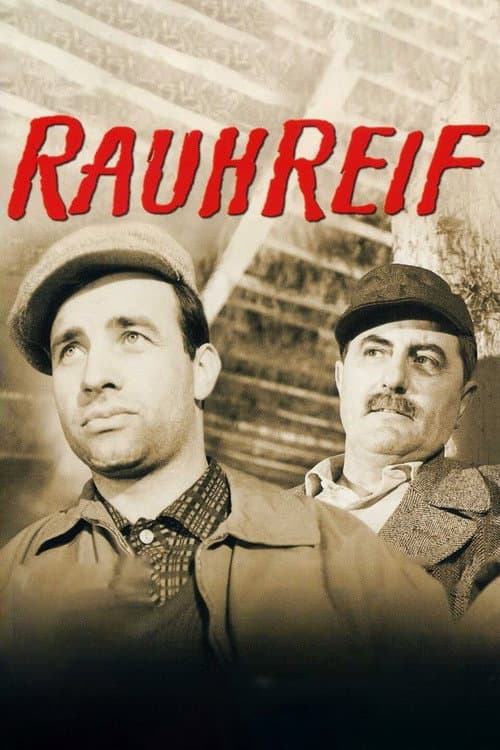
Movie - 1963, 2h 15m • Main Cast Role
In 1960, 400,000 farmers are forced to join the LPG. After the forced collectivization, Thomas, son of the experienced LPG chairman Rothardt, is delegated to the Oderbruch. However, he is unable to cope with the unwilling farmers in the countryside and his task of improving their work. He meets with incomprehension from his father and a conflict arises between the two.
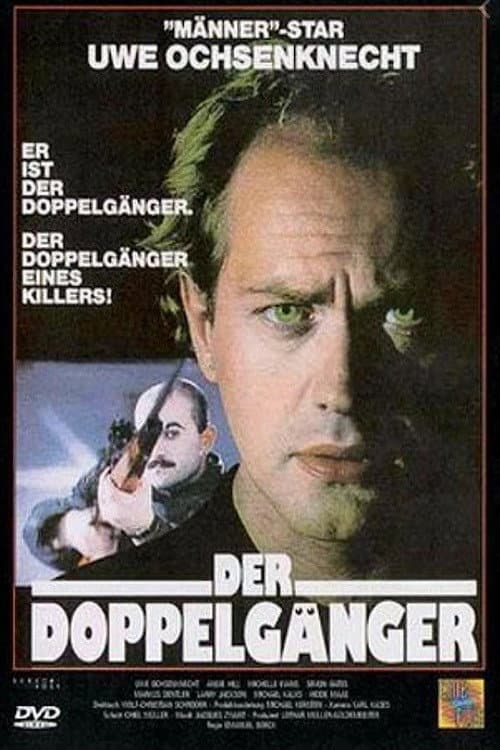
Movie - 1989, 2h 15m • as Model
Biology student Harry is kicked out of his research program. He does not understand why. What Harry don't know is that he has a double.
Movie - 1989, 2h 15m • as Modell
Biology student Harry is kicked out of his research program. He does not understand why. What Harry don't know is that he has a double.
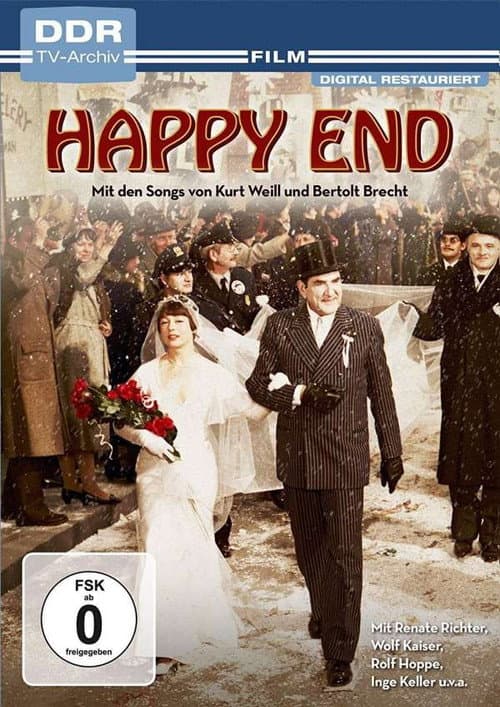
Movie - 1977, 2h 15m • as Lilian Holiday
In Chicago of the 1920s, crime gangs are fighting a bitter battle for power. Gangster boss Bill Cracker plans a bank robbery with his cronies in Bill's Ballhouse just as the ladies of the Salvation Army enter. Among them is the magical Lilian, who Bill immediately falls for. This has an impact on the planned coup. Shootouts, chases, and the fight for the big money are the ingredients to this comedy, whose famous songs Bertolt Brecht and Kurt Weill wrote.
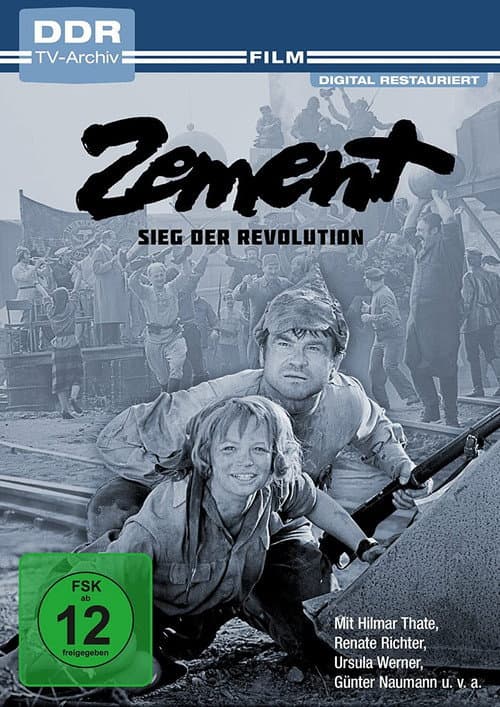
Movie - 1973, 2h 15m • Main Cast Role
Early 1921: a man is on his way home. Gleb Chumalov, regimental commander, worker and Hero of the Order of the Red Banner, returns to his home town from the Civil War. The victory over the enemies of the Russian people gives him the conviction that a new, better time will dawn overnight. Gleb looks for his comrades from earlier years, but only finds people who are emaciated by their efforts. The cement works where he used to work has been plundered and abandoned. With great effort, Gleb and his comrades try to get the plant up and running again. The struggle seems to begin anew... It is the time after the victory of the “Great October Socialist Revolution“ and the time of building a new society.

Movie - 1975, 2h 15m • as Sophia
An outstanding performance featuring brilliant storytelling, high stakes drama, and unforgettable character arcs.