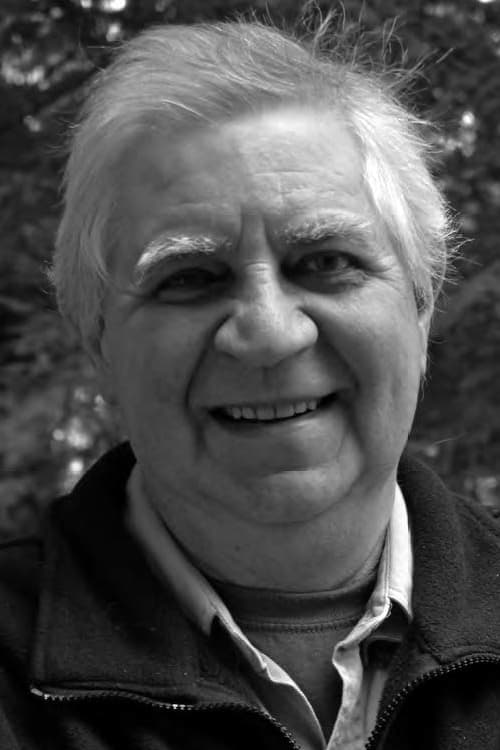
Jean Pierre Lefebvre
Biography
Jean Pierre Lefebvre (born 17 August 1941) is a Canadian filmmaker. He is widely admired as "the godfather of independent Canadian cinema," particularly among young, independent filmmakers. Jean Pierre Lefebvre studied literature at the University of Montréal and taught for two years at the Jesuit-run Loyola College in Montreal (now part of Concordia University). He began writing as a film critic, first for Quartier Latin, then for Séquences and Objectif. He directed his first film, a short drama, then three independent features. He joined the National Film Board of Canada and made two films, including the 1968 feature My Friend Pierrette (Mon amie Pierrette), co-starring Raôul Duguay and produced by Clément Perron. Lefebvre was then asked to head the NFB's French-language fiction studio. He began its Premières Oeuvres series, designed to make low-budget shorts and features. Four features and a number of shorts were produced within a year before the initiative was terminated, and Lefebvre left to form his own production company, Cinak, with his wife and editor, Marguerite Duparc. He writes and produces all his own films. Lefebvre was one of the first Canadian filmmakers to receive international acclaim for his work; his film Don't Let It Kill You (Il ne faut pas mourir pour ça) (1967) was the first Canadian film to be invited to the Cannes Film Festival. He proved to be successful again at Cannes when he received the International Critics' Prize for Les fleurs sauvages (1982) and his film Le jour S... (1984) was screened in the Un Certain Regard section. His 1973 film The Last Betrothal (Les dernières fiançailles) won the prestigious Prix de l'Organisation catholique internationale du cinéma in 1974. Il ne faut pas mourir pour ça (1967), Le Vieux pays où Rimbaud est mort (1977), and Aujourd'hui ou jamais (1997) make up his Abel Trilogy; three feature films starring the recurring character of Abel Gagné played by Marcel Sabourin. In 1991, he was made an Officer of the Order of Canada "for his innovative and high-quality feature films". In 1995 he was awarded the Prix Albert-Tessier. In 2013, Lefebvre received a Governor General's Performing Arts Award. Source: Article "Jean Pierre Lefebvre" from Wikipedia in English, licensed under CC-BY-SA 3.0.
Known For & Full Filmography12 Titles
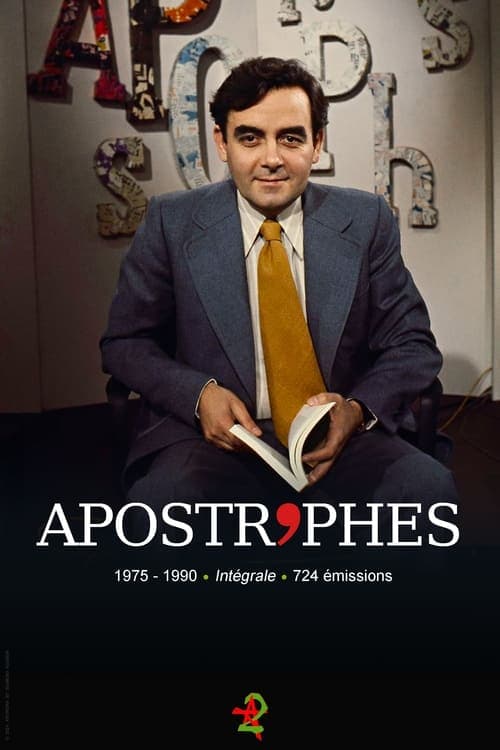
Drama Series - 1975, 16 episodes • as Self
Apostrophes was a live, weekly, literary, prime-time, talk show on French television created and hosted by Bernard Pivot. It ran for fifteen years (724 episodes) from January 10, 1975, to June 22, 1990, and was one of the most watched shows on French television (around 6 million regular viewers). It was broadcast on Friday nights on the channel France 2 (which was called "Antenne 2" from 1975 to 1992). The hourlong show was devoted to books, authors and literature. The format varied between one-on-one interviews with a single author and open discussions between four or five authors.

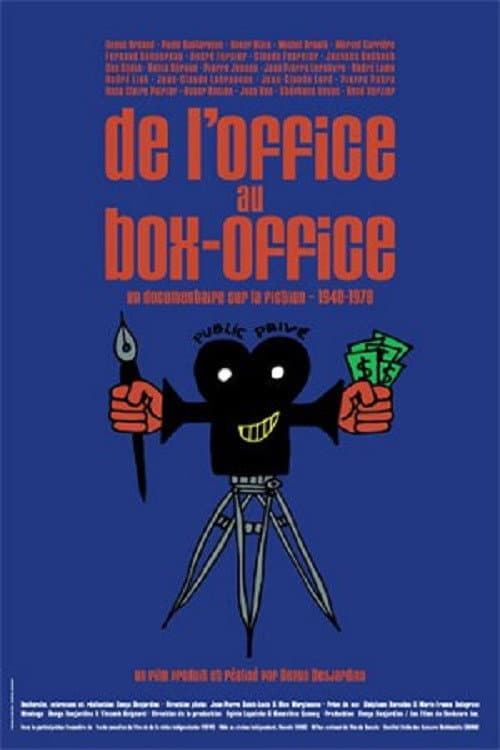
Movie - 2011, 2h 15m • as self
A two-part in-depth exploration of the evolution of the private film industry, seen through the eyes of more than 50 industry professionals. Part One (1939-1979) : Artists and professionals from the social and commercial film sectors recount the struggle to build a film industry that is privately operated yet publicly funded. Part Two (1980-2010) : Executives, policymakers, and industry professionals trace the origins of the major funding institutions and discuss the unintended consequences of building a cultural industry around performance metrics, revenue generation, and private profit.
Movie - 2009, 2h 15m • as Jean Pierre Lefebvre
An outstanding performance featuring brilliant storytelling, high stakes drama, and unforgettable character arcs.

Movie - 1973, 2h 15m • as Jean-Pierre Caron
The unexpected return of his ex-wife and the assembly of a group of protesters both threaten to wreck a corrupt contractor's inauguration party for his new superhighway.

Movie - 2011, 2h 15m • as L'évêque
Montréal, 1959. In the classroom of Sister Cecilia, Leonie (aged 11) first met Father Malachy, a young Dominican father who has come to visit his school. It is love at first sight for this lonely and dreamy child who took refuge in religion to escape a mother who is emotional and too worried. But there is also love at first sight between Sister Cecilia and Father Malachy. Between human love and the love of God, which will prevail?

Movie - 2009, 2h 15m • as Maître Bélanger
After losing a loved one, Simone decides to volunteer in a hospital and spends her days with terminally ill patients. However, other parts of her life soon begin to suffer as well.

Movie - 2003, 2h 15m • Main Cast Role
An outstanding performance featuring brilliant storytelling, high stakes drama, and unforgettable character arcs.

Movie - 1997, 2h 15m • as Henry
A computer scientist scans dreams with a computer.

Movie - 2009, 2h 15m • as Jean-Paul
Jean-Paul is a public servant, tired of toiling at his soul-destroying job. As a writer, he feels out of touch with the times and longs for inspiration.

Movie - 2013, 2h 15m • as Self
This short film pays tribute to filmmaker Jean Pierre Lefebvre. A seminal figure in Canadian cinema, Lefebvre has received international acclaim for his innovative, thoughtful and fiercely independent films.

Movie - 2024, 2h 15m • as Self
Every morning, Marcel confides in his tape recorder. It is from his reflections on life that this film takes us into the wake of his story.

Movie - 1968, 2h 15m • Main Cast Role
A carpenter is asked by his boss to serve as a guide for the new secretary, a young woman just arrived in Montreal from France. Both of their lives change as he shows her around the city.