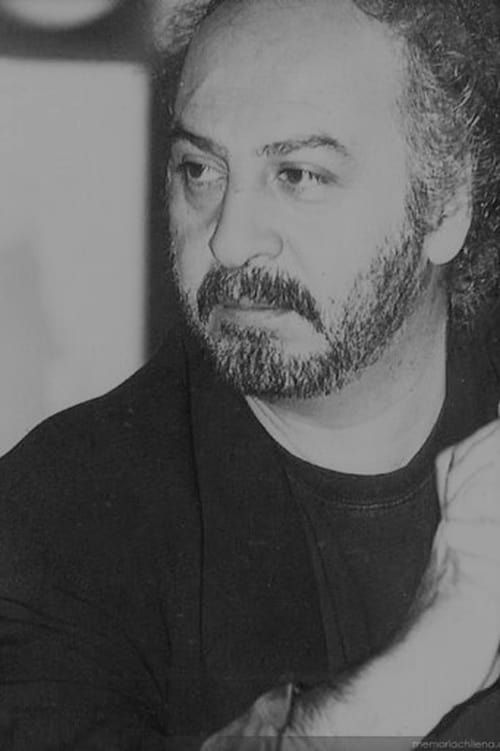
Miguel Littín
Biography
Miguel Ernesto Littín Cucumides is a Chilean film director, screenwriter, film producer and novelist. Miguel Littín directed the most popular Chilean film of all times, El Chacal de Nahueltoro (1969) becoming a figure of the New Latin American Cinema. In México he directed several films. Letters from Marusia, based on a miners strike in Chile. Letters from Marusia was nominated for the Academy Award for Best Foreign Language Film. El Recurso del Método (Long Live the President) based on the Alejo Carpentier's book El Recurso del método (Reasons of State) a co-production with Mexico,France and Cuba. The Widow of Montiel with Geraldine Chaplin based on a Gabriel García Márquez short story. Then he went to Nicaragua to do Alsino and the Condor, based the novel Alsino by Pedro Prado. In 1981 he was a member of the jury at the 12th Moscow International Film Festival. He moved to Spain in 1984, Littín decided to enter Chile clandestine to do a documentary that showed the condition of the country under the Pinochet's regime. It was made the subject of Nobel Laureate Gabriel Garcia Marquez's book Clandestine in Chile: The Adventures of Miguel Littin. He eventually returned to Chile where he continued to make films, among them Tierra del Fuego based on the adventures of Julius Popper an explorer and Dawson, Isla 10, about a group of political prisoners sent to Dawson's island during Pinochet's regime. Littín was the mayor of his home town in the center valley, Palmilla in 1992-94 and re-elected for the period 1996-2000. His films Actas de Marusia and Alsino and the Condor were nominated by the Academy of Motion Picture Arts and Sciences for Best Film in a Foreign Language. Alsino and the Condor won the Golden Prize at the 13th Moscow International Film Festival. His 2005 film The Last Moon was entered into the 27th Moscow International Film Festival.
Known For & Full Filmography9 Titles
Drama Series - 1978, 16 episodes • as Self
An outstanding performance featuring brilliant storytelling, high stakes drama, and unforgettable character arcs.

Drama Series - 2011, 16 episodes • as Self (archive footage)
Daily interviews discussing the guest's personal lives and national contingency.

Drama Series - 2015, 16 episodes • as Self
An outstanding performance featuring brilliant storytelling, high stakes drama, and unforgettable character arcs.

Movie - 2018, 2h 15m • as Self - Filmmaker
After the coup d'État of the Democratic government of Allende, the embassy of Italy in Santiago played a major role in helping the opposers of the regime, and extradited many of them to Italy.

Drama Series - 1987, 16 episodes • as Fernando de los Ríos
Lorca, a great Spanish poet, playwright, and theatre director. García Lorca achieved international recognition as an emblematic member of the Generation of '27. He was executed by Nationalist forces at the beginning of the Spanish Civil War. Nickolas Grace gives a fabulous interpretation in the title role and he even bears a remarkable resemblance to Lorca.

Movie - 1986, 2h 15m • Main Cast Role
In 1985, exiled director Miguel Littín secretly reentered Chile to film this sweeping documentary portrait of the country under the dictatorship of Augusto Pinochet. Shot clandestinely and later released as a four-part television series, the film combines interviews, historical reflection, and on-the-ground footage to examine Chile’s political climate more than a decade after the 1973 coup.

Movie - 1984, 2h 15m • as Self
Documentary in four parts on Latin American cinema. Fourth episode: in Cuba, the ICAIC, created in the aftermath of the Castro revolution, is at once a film school, a production company and a state cultural branch. Cuban filmmakers testify to the situation and themes specific to their national cinema.

Movie - 1967, 2h 15m • Main Cast Role
Feature film that wraps, through Jorge Lillo's text, three short films by Helvio Soto

Movie - 2024, 2h 15m • as Si mismo
An outstanding performance featuring brilliant storytelling, high stakes drama, and unforgettable character arcs.